
Green Building Materials
Building a Sustainable Future Through Advanced Materials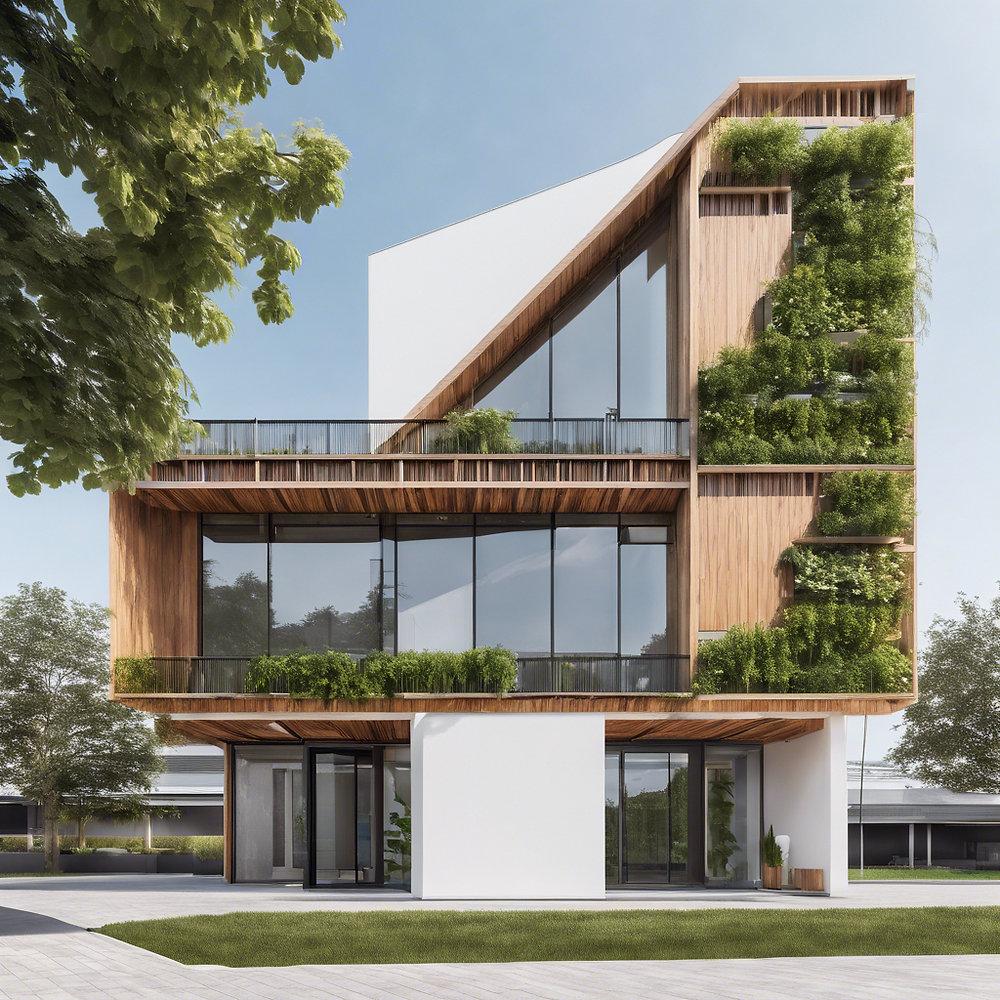
Green Building Materials
At Badgers Infrastructure Private Limited, we recognize that the future of sustainable construction depends not only on how infrastructure is designed and built, but also on the materials used throughout its lifecycle. Our focus on Green Building Materials brings together low-carbon construction technologies, recycled resources, advanced composites, and resource-efficient building solutions.
We explore and promote materials that help reduce embodied energy, reuse industrial and construction waste, conserve natural resources, improve thermal performance, and enhance infrastructure durability. Through material science, engineering innovation, and sustainable construction practices, we aim to support the development of energy-efficient buildings and environmentally responsible infrastructure.
Our Green Building Materials Portfolio
1. Autoclaved Aerated Concrete (AAC) Blocks
Lightweight, precast concrete masonry blocks manufactured using fly ash, lime, cement, gypsum, and an expansion agent. Their cellular structure provides thermal insulation and reduces structural dead loads.
Applications: Residential and commercial buildings, internal and external walls, fire-rated partitions, and acoustic barriers.
2. Fly Ash Bricks
Environmentally engineered masonry units made using fly ash, stone dust or sand, and lime or cement. They utilize industrial byproducts, avoid conventional kiln firing, and help conserve agricultural topsoil.
Applications: Residential housing, load-bearing and non-load-bearing walls, industrial buildings, and boundary walls.
3. Geopolymer Concrete
An alternative concrete technology that uses industrial byproducts such as fly ash and Ground Granulated Blast-Furnace Slag (GGBS), activated through alkaline solutions instead of conventional Portland cement.
Applications: Precast structural components, bridge segments, railway sleepers, industrial flooring, sewage treatment structures, and marine infrastructure.
4. Glass Fiber-Reinforced Polymer (GFRP) Rebars
Advanced non-metallic reinforcement bars made from continuous glass fibers embedded in a polymer resin matrix. Their corrosion resistance and lightweight properties make them suitable for demanding infrastructure environments.
Applications: Water and sewage treatment plants, coastal structures, irrigation canals, bridge decks, road pavements, and chemical infrastructure.
5. Recycled Concrete Aggregate (RCA)
Processed construction and demolition waste converted into reusable aggregate. RCA helps divert demolition debris from landfills and reduces the demand for naturally quarried stone.
Applications: Road sub-bases, interlocking pavers, kerbstones, drainage covers, and selected concrete applications.
6. Engineered Bamboo
A renewable construction material produced by treating, drying, compressing, and bonding bamboo into standardized structural components. Its rapid renewability and high strength-to-weight ratio make it a promising alternative for sustainable construction.
Applications: Structural trusses, columns, beams, flooring, facade cladding, acoustic panels, and modular buildings.
7. Cross-Laminated Timber (CLT)
An engineered wood product manufactured by bonding layers of sustainably sourced lumber at alternating right angles. CLT combines structural strength with lightweight construction and carbon storage potential.
Applications: Structural floor slabs, roof decks, load-bearing walls, commercial buildings, institutional campuses, and modular construction.
8. Stabilized Rammed Earth
A sustainable wall construction technique using locally sourced soil blended with a small proportion of lime or cement stabilizer and mechanically compacted within formwork. It offers high thermal mass and reduces transportation requirements.
Applications: Sustainable residences, eco-resorts, educational institutions, cultural buildings, and passive-solar construction.
9. Hempcrete
A lightweight, bio-based building material made from the woody inner core of hemp plants mixed with lime binder and water. It offers thermal and acoustic insulation while supporting lower-carbon building practices.
Applications: Non-load-bearing wall infill, roof insulation, acoustic partitions, and building retrofits.
10. Cool Roof Tiles & Low-Emissivity (Low-E) Glass
Energy-efficient building-envelope materials designed to reduce solar heat gain. Cool roof tiles reflect sunlight, while Low-E glazing helps limit infrared heat transfer while allowing natural daylight into buildings.
Applications: Residential rooftops, commercial facades, skylights, industrial buildings, terraces, and energy-efficient structures.
Advancing Low-Carbon Construction
Our green building materials focus is guided by five important principles:
- Lower Embodied Carbon: Exploring materials and construction technologies that can reduce the carbon impact associated with conventional building materials.
- Industrial Waste Utilization: Encouraging the productive use of fly ash, steel slag, and construction and demolition waste.
- Resource Conservation: Supporting materials that reduce dependence on virgin resources and help preserve natural materials.
- Energy Efficiency: Promoting materials that improve thermal insulation and reduce building cooling requirements.
- Durability & Performance: Exploring advanced composites and engineering materials designed for demanding construction and infrastructure applications.
Supporting Green Building Standards
Appropriate selection and specification of green building materials can contribute to material conservation, recycled-content, low-embodied-carbon, and operational-energy-efficiency objectives under recognized green building frameworks.
Relevant frameworks include:
- IGBC – Indian Green Building Council
- ECBC – Energy Conservation Building Code
- ECBC – Energy Conservation Building Code
- GEM
- LEED – Leadership in Energy and Environmental Design
Material selection, project design, documentation, and applicable rating requirements determine the credits and compliance achieved by an individual project.
Engineering a Greener Built Environment
At Badgers Infrastructure Private Limited, we believe that sustainable construction requires continuous innovation in materials, engineering, and project execution. By exploring advanced composites, recycled materials, bio-based construction products, and low-carbon alternatives, we aim to contribute to a more resource-efficient and resilient built environment.
Building Better. Building Responsibly. Building for the Future.
Infrastructure & EPC Solutions
From engineering and procurement to construction and commissioning, we provide integrated solutions that ensure quality, efficiency, and successful project delivery.